
Learn more about CBG the ‘Mother of all Cannaboinds” in our latest deep dive.
Uncover CBG’s unique properties, potential benefits, and how it stands apart from its famous counterparts like CBD and THC. Perfect for both cannabis enthusiasts and the canna-curious, this guide illuminates the science, effects, and possibilities offered by CBG. Whether you’re seeking to expand your cannabinoid knowledge or exploring alternative wellness options join us on a journey through the remarkable landscape of CBG.
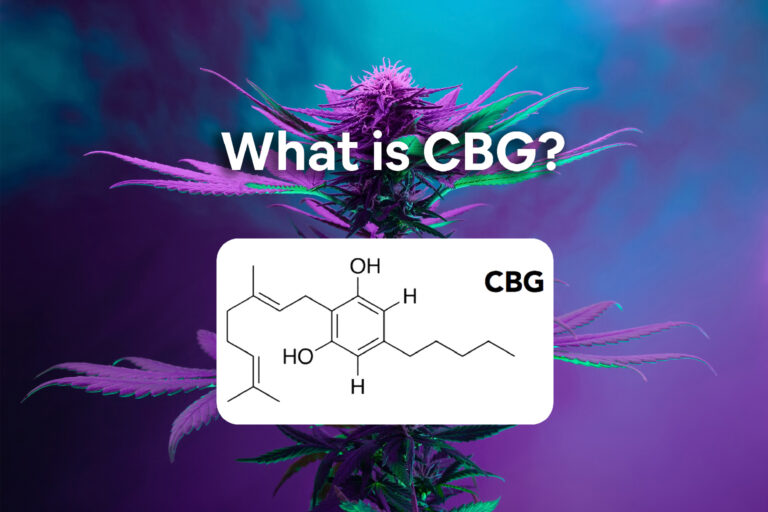
What is CBG?
Understanding CBG: The Mother-of-All Cannabinoids
In short, CBG is one of many cannabinoids found in the cannabis plant. However, CBG is special. Why?
Because, Cannabigerol, or CBG, acts as a cornerstone in the cannabinoid family it is referred to by many as the “Mother of All Cannabinoids”. In the early stages of the cannabis plant’s life, CBG is present primarily as its acidic precursor, cannabigerolic acid (CBGa). This compound is pivotal, serving as the biochemical springboard from which many other cannabinoids, including THC and CBD.
CBG’s role as the originator of other cannabinoids highlights its significance in the cannabis plant’s lifecycle.
Where Does CBG Come From?
The Evolution of CBG Production
In the unfolding lifecycle of the cannabis plant, CBG takes on the role of a catalyst, initiating the development of other cannabinoids as the plant matures.
When the cannabis plant is young, CBG is found in high concentrations, initially in the acid form CBGa. As the plant matures, the CBGa converts, via interactions with enzymes within the plant, to the acid forms THC and CBD. This enzymic process results in more mature cannabis plants having lower levels of CBG.
The scarcity of CBG in fully grown plants has spurred innovative agricultural and extraction techniques aimed at enhancing its yield. These advancements reflect a growing recognition of CBG’s potential, illustrating the ingenuity and adaptability of cultivators and researchers dedicated to uncovering the secrets of this elusive compound.
Can CBG Get Me High?
Psychoactivity and CBG: What's the Verdict?
Simply put, no. Like CBD, CBG does not produce the ‘high’ that many are accustomed to from THC.
CBG interacts with the body’s endocannabinoid system in a way that doesn’t create an intoxicating effect. The non-psychoactive feature of CBG coupled with its benefits sets it as a cannabinoid of interest for those who wish to explore cannabis use but want to reduce the chance of psychoactive experiences. It’s akin to enjoying the serene beauty of a garden without the intoxicating fragrance of all its flowers—a gentle, unobtrusive presence.
What Does CBG Feel Like?
Exploring the Subtle Effects of CBG on its Own
Experiencing CBG on its own can vary from person to person and is often characterized by subtle and nuanced effects rather than the pronounced psychoactive sensations associated with THC.
Physically, CBG is often described as delivering a gentle wave of relaxation, subtly easing areas of discomfort or tension. This physical ease allows for engagement in daily tasks with increased comfort, potentially making the day’s challenges seem more manageable.
Mentally, the effect of CBG alone can be likened to turning down the volume on mental chatter, providing a clearer headspace and a calm that aids in focus and presence. This mental clarity and tranquility isn’t about escaping reality but rather enhancing one’s ability to navigate it with a steadier hand.

Increasing Euphoria: Combining THC and CBG
When CBG is combined with THC, however, the experience can shift. The non-psychoactive grounding nature of CBG may interact with THC to create a more nuanced, possibly more enjoyable psychoactive experience. Users have reported that the presence of CBG alongside THC can lead to a more rounded, euphoric feeling—moderating some of the more intense aspects of THC’s high. This combination can potentially offer a synergistic effect, where CBG’s calming influence tempers THC’s psychoactivity, resulting in a harmonious balance that amplifies the positive aspects of both compounds.
This blend of CBG and THC can provide an experience where the euphoria and sensory enhancement from THC are complemented by the effects of CBG, crafting an encounter that marries the best of both worlds.
How does CBG Work?
CBG's Mechanisms of Interaction Within the Body
CBG works by engaging with the body’s endocannabinoid system (ECS), a complex network that plays a crucial role in maintaining physiological homeostasis.
Unlike its cousin THC, which primarily targets CB1 receptors in the brain and central nervous system to produce psychoactive effects, CBG is thought to have a more balanced attraction to both CB1 and CB2 receptors. This interaction does not lead to the ‘high’ sensations associated with THC but may influence the ECS in maintaining the body’s internal balance. It’s a bit like having a diplomat in the world of cannabinoids, mediating interactions without causing upheaval.
Is CBG Legal?
Deciphering the Legality of CBG
Typically yes. CBG is legal in most locations, as long as it is derived from hemp (and contains less than 0.3% THC).
In the United States, CBG is legal as long as it is derived from hemp (and contains less than 0.3% THC). If the CBG is derived from marijuana, it is scheduled under the Controlled Substances Act. Internationally, CBG is not scheduled under UN Convention on Psychotropic Substances but the laws in each individually country should be reviewed and followed.
However, as with any legal matter related to cannabis, the legal landscape is ever-evolving. It is advised that consumers stay informed about laws that may affect them.It resembles keeping up with the rules of a complex board game, where staying informed ensures you play wisely and within bounds.
CBG vs. CBD
What are the Differences between CBG & CBD?
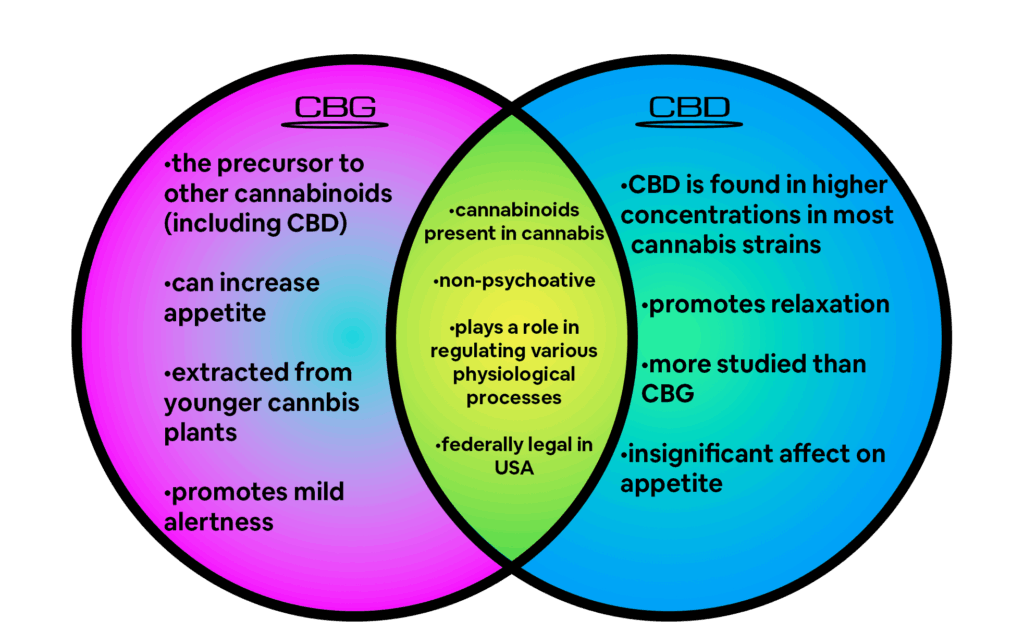
While CBG and CBD are both non-psychoactive cannabinoids celebrated for their potential without intoxication, they are distinct in their chemical makeup and interactions within the body.
CBG serves as a precursor to other cannabinoids, including CBD. Their differences extend into their modes of interaction with the body’s endocannabinoid system, with CBG having a more direct engagement with both CB1 and CB2 receptors, compared to CBD’s more indirect influence. This distinction between CBG and CBD can be likened to two artists contributing to the same mural; each brings their unique style and method to the tableau, enriching the overall composition with their contributions.
Why is CBD more popular than CBG?
CBD is more popular than CBG because CBD is more widely researched and understood, with more available information on its effects, side effects, and user experiences. In addition, CBD has historically been easier to produce and turn into consumer products compared to CBG.
What are the most Common Types of CBG Products?
Incorporating CBG into Your Daily Life
CBG comes in many different products. The most common are tinctures and edibles, primarily gummies and capsules.
Choosing the right method depends on personal preferences and goals. For those seeking rapid absorption, fast acting edibles such as gummies and drinks may be your best option (although there are not many CBG containing drinks).
For a more extended release, capsules can offer a more straightforward, dose-consistent option. It’s like selecting the perfect tool from a toolkit; each serves a specific purpose, contributing to the overall objective of enhancing well-being in a manner that resonates with you.

Tinctures

Gummies