
Explore the intriguing world of CBD with our latest deep dive!
This captivating read demystifies CBD, a remarkable compound that can offer the magic of cannabis without the high, interacting with our body in ways that could influence mood, sleep, and more. CBD’s journey from taboo to mainstream is nothing short of revolutionary. From how it’s extracted to how it pairs with THC, this piece promises to unravel the mysteries of CBD. Ready for the full scoop?
What is CBD?
Unmasking the 2nd most Popular Cannabinoid
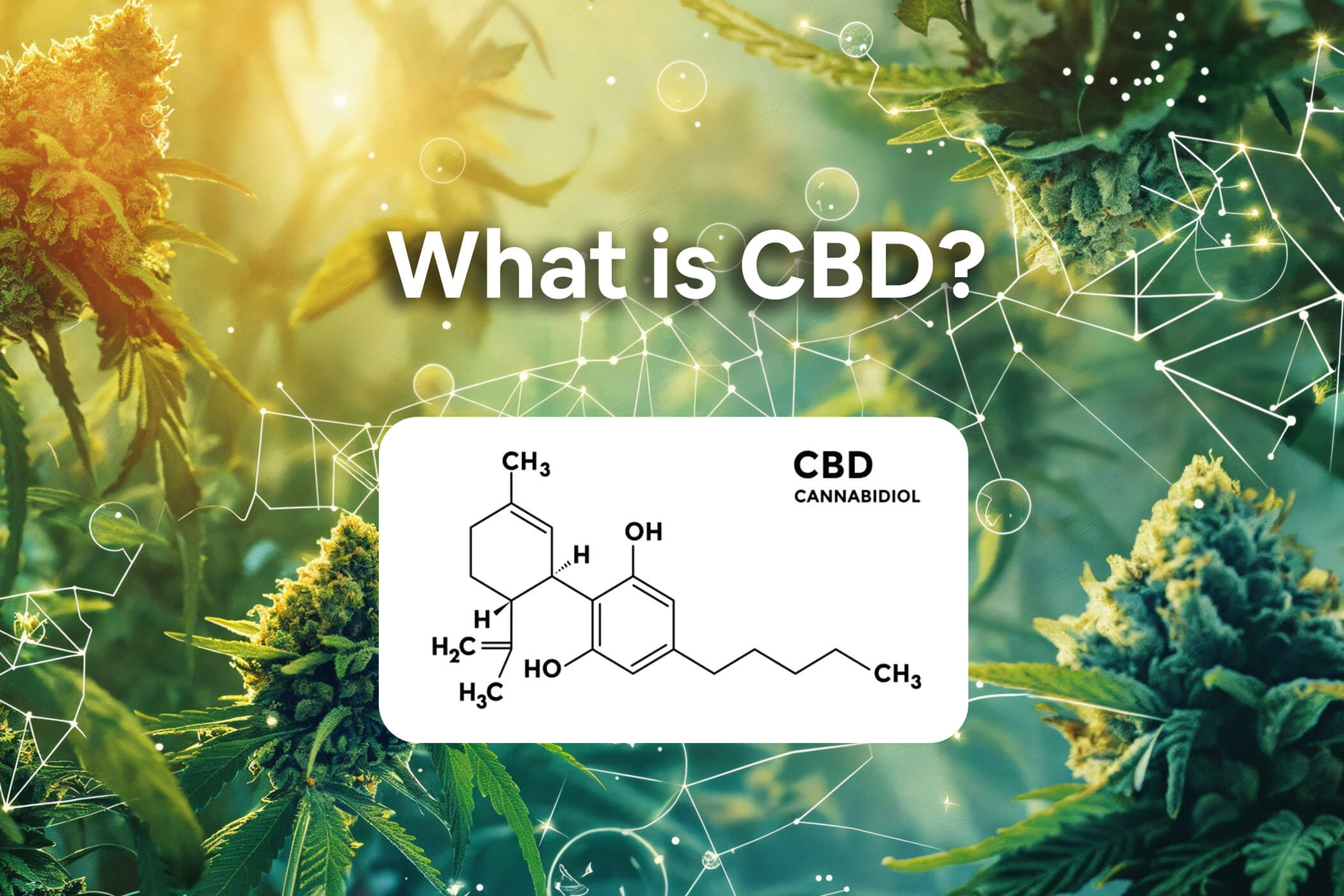
Cannabidiol (CBD) is one of the main cannabinoids found in the cannabis plant along with THC.
CBD is one of 3 main cannabinoids that are formed during the varying growth stages of the cannabis plant alongside THC and CBC.
In certain cases, CBD can actually lessen or neutralize the psychoactive effects of THC. Many people want the health benefits of cannabis without the high – or with less of a high. The fact that CBD is therapeutically potent as well as non-intoxicating, and easy to take as a CBD oil, makes it an appealing treatment option for those who are cautious about trying cannabis for the first time.
Where does CBD come from?
From Plant to Extract
We all know that CBD comes from the cannabis plant, but lets answer specifically where CBD comes from.
It all starts with CBG – ‘Mother of All Cannabinoids’. More specifically the acid form of CBG, CBGa. Enzymes interact with the CBGa molecule, causing it to convert into three major cannabinoid precursor compounds: tetrahydrocannabinolic acid (THCa), cannabidiolic acid (CBDa), and cannabichromenic acid (CBCa). Specifically, the enzyme CBD synthase is responsible for catalyzing the conversion of CBGa into CBDa. This reaction is influenced by the plant’s genetics, environmental factors, and the maturity of the plant.
As the cannabis plant matures or is subjected to processes such as drying or heating, CBDa (the acid form of CBD) undergoes a process called decarboxylation, a chemical reaction that removes a carboxyl group from CBDa, converting it into CBD. Decarboxylation can occur naturally over time or can be induced through heating, as is common during the extraction process or when cannabis is smoked or vaporized.
The resulting CBD can then be extracted from the plant material using various methods. The most common methods include ethanol, hydrocarbon (butane and/or propane), carbon dioxide (CO2) extraction or oil infusion. These extraction techniques are designed to isolate the cannabinoids from the plant matter, producing a concentrated form of CBD that can be formulated into a wide range of products.
Will CBD make me high?
Is CBD physcoactive
No, CBD will not make you feel “high.” Unlike THC, CBD is non-psychoactive. This means that it does not cause the intoxicating effects associated with THC.
People use CBD for various reasons, including seeking to support wellness and balance, but experiencing a high is not one of the effects of CBD. The focus with CBD is more on what you might not feel anymore, rather than what you do feel, with users often reporting a sense of calm or relief in areas they’re targeting, rather than an altered state of mind.
What Does CBD Feel Like?
Exploring the Subtle Effects of CBD on its Own
CBD on its own can provide a unique experience that lacks the psychoactive high associated with THC. Users typically report a sense of relaxation and ease without feeling intoxicated. The effects of CBD can vary based on dosage, form, and individual sensitivity.
Physically, CBD is often associated with a soothing sensation that may alleviate feelings of tension or discomfort. It’s not uncommon for users to notice a relaxed state throughout their body and a general sense of bodily ease. Since, this does not accompany a mental ‘high’, consumers can maintain clarity and function throughout their day.
Mentally, CBD tends to offer a calming effect, helping to reduce mental tension and promote a more balanced demeanor. Many users report a gentle shift towards calmness, aiding in tension reduction and potentially improving focus and restfulness. This mental relaxation is achieved without impairing cognitive abilities, making CBD a preferred option for those seeking mental ease without the high.
Combining CBD & THC for the full body high
When CBD is combined with THC, the experience can significantly differ due to the psychoactive properties of THC. Users often describe this combination as leading to a “full-body high,” where the calming effects of CBD blend with the euphoric sensations induced by THC. This synergy can enhance physical relaxation, further reducing tension and discomfort.
Mentally, the presence of CBD can moderate the intensity of THC’s effects, potentially leading to a more grounded and less anxious experience. This combination is praised for its ability to provide a holistic sense of well-being, where the mind and body both enter a deeply relaxed state, enhanced by the sensory amplification and mood-lifting properties of THC.
How Does CBD Work?
CBD's Mechanism of Interaction Within the Body
CBG works by engaging with the body’s endocannabinoid system (ECS), a complex network that plays a crucial role in maintaining physiological homeostasis. The ECS consists of endocannabinoids (molecules produced by the body), receptors to which these molecules bind, and enzymes that break them down.
There are two primary endocannabinoid receptors: CB1, primarily found in the central nervous system, and CB2, located in the peripheral nervous system, including immune cells. Unlike its cannabis counterpart THC, which directly binds to these receptors, CBD’s interaction with the ECS is less direct. It is thought to encourage the body to make more of its own endocannabinoids, which may help maintain balance and normal functioning.
Additionally, CBD’s interactions are not limited to the ECS. It may also affect non-cannabinoid receptors. For example, CBD is thought to interact with TRPV1 receptors. These receptors are involved in mediating body temperature, pain perception, and inflammation. Moreover, it’s suggested that CBD may influence the ECS by inhibiting the breakdown of anandamide, a key endocannabinoid, potentially affecting the body’s internal balance.
The full extent of CBD’s interactions with the ECS and its indirect effects on the body’s systems are areas of ongoing research, aiming to understand how CBD might influence physiological balance without directly engaging the same pathways as traditional ECS activators like THC.
Is CBD legal?
Explaining the legalities of CBD
Typically yes. CBD is legal in most locations, as long as it is derived from hemp (and contains less than 0.3% THC).
In the United States, CBD is legal as long as it is derived from hemp (and contains less than 0.3% THC). This is due to the passing of the 2018 Farm Bill which removed hemp from the Controlled Substances Act. If the CBD is derived from marijuana, it is scheduled under the Controlled Substances Act. In addition, the FDA has approved one CBD-based medication, Epidiolex, for the treatment of specific forms of epilepsy.
Globally, the legality of CBD varies widely. Some countries have specific regulations allowing the use and sale of CBD under certain conditions, while in others, CBD remains a controlled or completely prohibited substance. Therefore, it’s crucial to check the local laws in your specific location or any location you plan to transport CBD to or from.
What's the difference between CBD and THC?
CBD vs THC
Although they are both cannabinoids and the most common cannabinoids, CBD and THC have quite a few major differences.
Effects on the Human Body
The most notable difference between CBD and THC is their psychoactive effects. THC is best known for its psychoactive properties, which is what gives cannabis users a “high.” It interacts with the brain’s cannabinoid receptors, leading to changes in mood, behavior, and perception. Conversely, CBD does not produce a psychoactive effect. Instead, it is often sought after for its potential therapeutic benefits without altering a person’s state of mind.
Legal Status
The legal status of CBD and THC varies significantly around the world and often within countries, especially in the United States. Hemp-derived CBD, containing less than 0.3% THC, has been legalized at the federal level. This has led to a proliferation of CBD products available for wellness and therapeutic use. On the other hand, THC remains a controlled substance under federal law in the U.S., although many states have legalized it for medical and recreational use.
Receptor Interaction:
THC and CBD interact differently with the body’s endocannabinoid system (ECS). THC binds directly to cannabinoid receptors (CB1 and CB2), which are part of the ECS and spread throughout the body and brain, leading to its psychoactive effects. CBD, on the other hand, does not bind directly to these receptors but instead influences the ECS indirectly in various ways, such as by enhancing the body’s use of its own endocannabinoids.
What are the most common types of CBD products?
Adding CBD to your Daily Routine
CBD comes in many different products. The most common are vape cartridges, CBD flower, tinctures and edibles, primarily gummies and capsules.
Choosing the right method depends on personal preferences and goals. For those seeking rapid absorption, fast acting edibles such as gummies and drinks may be your best option as there are many different companies producing CBD only and CBD containing gummies and drinks.
For a more extended release, capsules can offer a more straightforward, dose-consistent option. It’s like selecting the perfect tool from a toolkit; each serves a specific purpose, contributing to the overall objective of enhancing well-being in a manner that resonates with you.

CBD Flower & CBD Vapes

CBD Gummies

CBD Drinks
Will CBD show up on a drug test?
What is CBD?
Technically speaking, CBD should not show up on a drug test.
However, many products containing CBD may also contain THC which will likely show up on a drug test, even if small amounts of it have been consumed. It is usually best to play it safe when it comes to drug testing and try to avoid consumption of any cannabinoid products.